Approach
How to develop and execute a lead generation strategy.
Qualified pipeline growth starts with aligning on what makes a lead marketing and sales qualified.


As buyer behavior, market dynamics, and AI usage continue to evolve, B2B organizations need to build and optimize their marketing programs to drive qualified pipeline and sales opportunities. Through marketing strategies and messaging informed by data-driven insights and buyer motivations, B2B organizations can improve marketing ROI.
We partner with B2B organizations navigating complex sales cycles and multiple stakeholders to achieve measurable growth. Our clients need to engage the right buyers at the right time with the right content to strengthen their competitive position and adapt to evolving buyer expectations.
solution
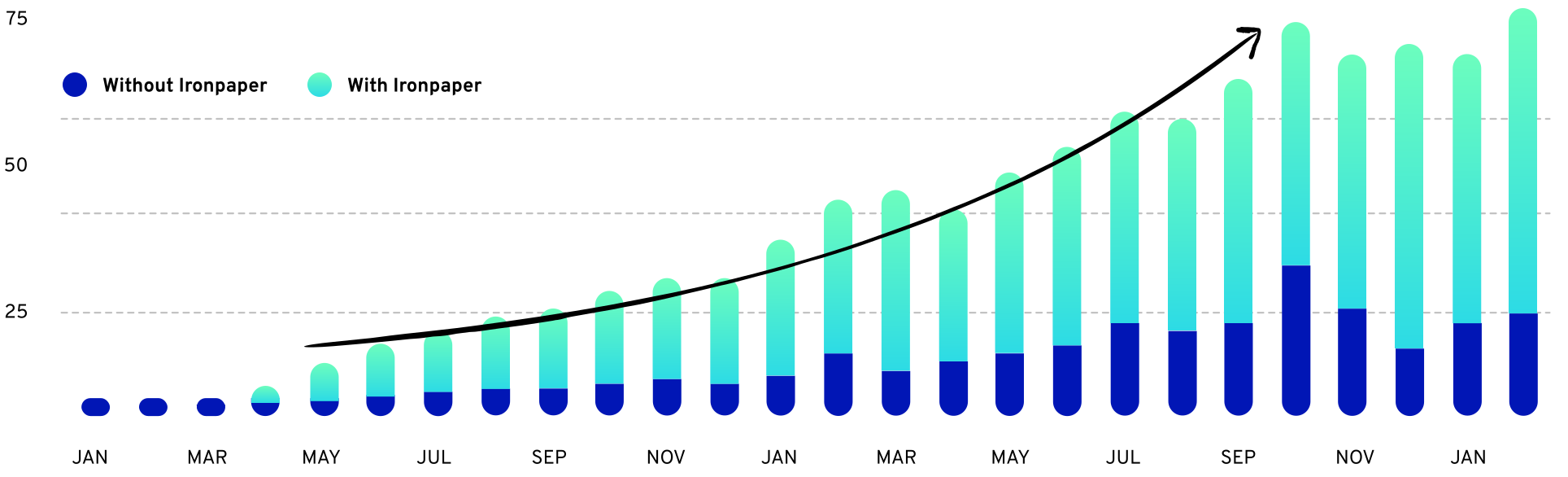
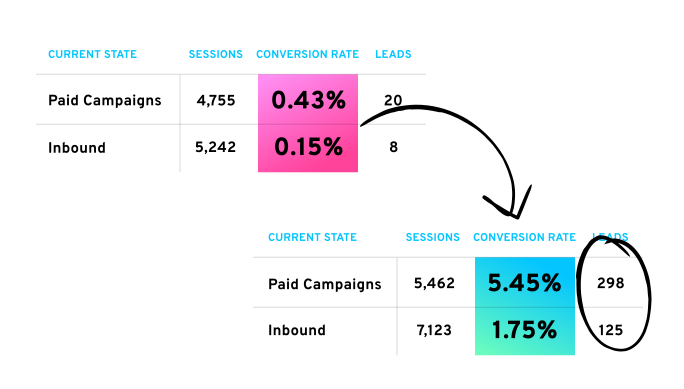
Conversion rates are crucial to measuring and proving the success of marketing efforts toward business ROI. For many B2B organizations, the problem isn’t necessarily lead volume. It’s making sure that those leads meet marketing and sales’ aligned definition of what makes a lead qualified to speak to sales.
We help clients improve their marketing-qualified lead (MQL) and sales-qualified lead (SQL) conversion rates from inbound B2B marketing sources by driving short- and long-term strategy, building pilot campaigns to create traction, optimizing messaging based on data and insights, and scaling successful efforts.
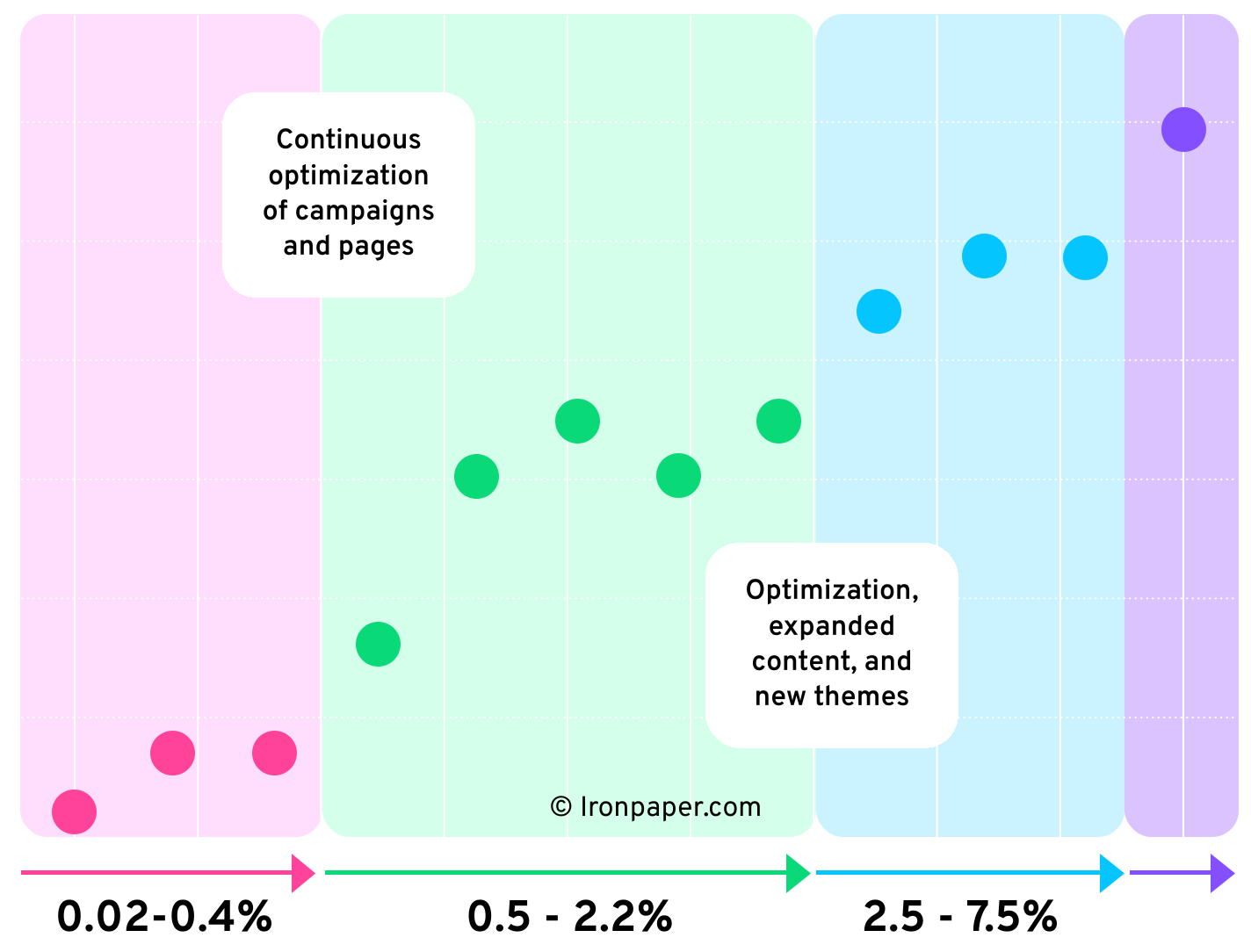
The average conversion rate for B2B organizations is 2-5%, according to Lucky Orange. Conversions can range from email subscribers and content offer downloads to form submissions, MQLs, and SQLs. However, conversion rates can be very different depending on the specific industry, buyer’s journey stage, channel, and other factors.
To determine a good conversion rate, you need to answer two important questions: what is the value of a conversion and who are we converting? For example, an SQL conversion is more valuable than a newsletter subscriber, and they should fit your ideal customer profile (ICP). Ironpaper considers these factors to help our clients drive more opportunities.

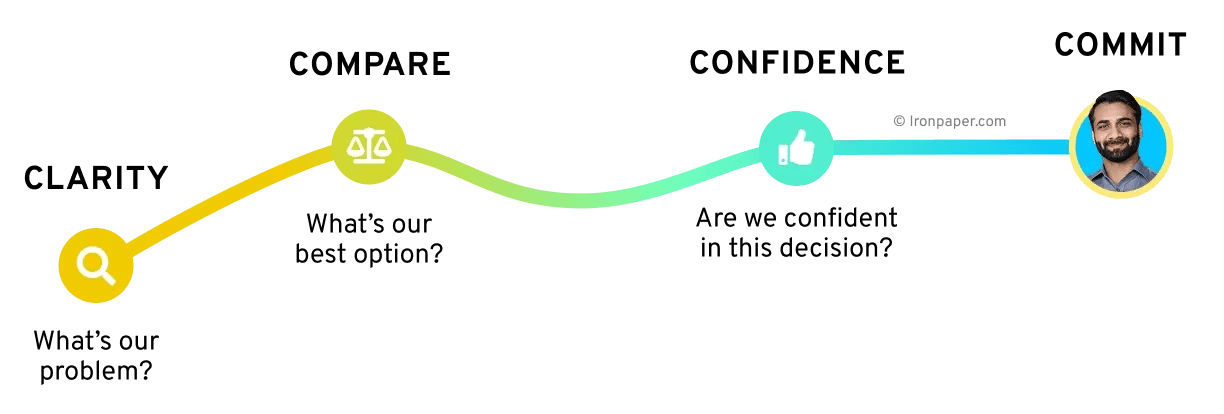
Generating qualified leads takes more than just launching campaigns. Ironpaper fine-tunes campaigns to ensure they reach the right audience, speak to buyer motivations, and attract the buyers who actually convert.
That means building content that educates and earns trust, using analysis to understand where engagement is happening and why, and iterating based on what buyer behavior actually shows, not what we assumed.
Results


IRONPAPER RESEARCH
See how your company stacks up in Ironpaper’s latest research report