The transformation reshaping B2B growth in 2026 extends beyond marketing. It’s redefining how B2B sales teams engage, how enablement supports them, and how organizations build confidence throughout the entire buying journey.
As discovery becomes continuous and trust becomes the buyer’s filter for truth, sales must evolve to become an essential partner in the same system of credibility.
Marketing now operates in an environment of continuous discovery, and sales must operate in an environment of continuous validation. This means sales must help buyers make sense of complexity, align decision groups, and create trust in the outcomes they’re choosing.
The End of Persuasion
The traditional concept of “selling” is losing its force. Buyers don’t want to be convinced. They want to be understood. They’ve already done the research, explored peer reviews, and tested solutions long before a salesperson enters the conversation.
Persuasion is increasingly met with resistance because it feels disconnected from the buyer’s journey. In contrast, proof-driven sales begins where marketing leaves off. It guides the buyer through verification, risk mitigation, and alignment.
Every message, case story, or conversation becomes a chance to reduce uncertainty.
And in complex sales, certainty is the new close rate.
The most successful sales teams in 2026 won’t sell faster. They’ll build confidence faster.
Sales Enablement as a System for Clarity
Enablement once meant giving sales teams content and tools. In 2026, enablement evolves into a system for clarity, helping sellers communicate value with accuracy and relevance.
Enablement is no longer measured by the number of assets created but by how clearly it helps buyers understand a solution. The best enablement teams translate marketing insights into meaningful sales conversations.
Enablement in 2026 must:
- Turn content into consultative guides, not just collateral.
- Combine first-party data with real buyer insights.
- Equip sales with stories that connect proof, empathy, and outcomes.
Clarity becomes the new measure of success.
Proof Over Pitch
Buyers are no longer satisfied with claims. They want validation. Proof is no longer a slide at the end of the presentation. It’s the thread running through the entire sales process.
The new proof system combines data, transparency, and story. It shows not just what a company achieved, but how it thinks, collaborates, and delivers.
In 2026, the most trusted sales organizations will build credibility through:
- Transparent storytelling: sharing both successes and lessons learned.
- Real-world evidence: case stories that go beyond performance metrics.
- Contextual relevance: demonstrating understanding of the buyer’s environment and pressures.
Buyers don’t need another vendor with claims of innovation. They need a partner who can show what credibility looks like in action.
As buyers expect more proof, technology becomes a tool for finding and reinforcing the right evidence.
The Role of AI is Insight, Not Instinct
AI will accelerate how sales teams gather data, predict intent, and prioritize accounts. But it can’t replace the human instinct that interprets nuance, context, and emotion.
Automation can identify who’s interested. Humans must determine why that interest matters. The goal isn’t motion. Its meaning.
In 2026, the most effective sales teams will utilize AI as a diagnostic amplifier, enabling them to listen more effectively rather than talk faster.
They’ll leverage technology to:
- Map decision networks and stakeholder relationships.
- Identify confidence gaps in the buyer journey.
- Recommend tailored proof points that reinforce trust.
However, the moment of meaning, when a buyer feels seen, heard, and certain, remains profoundly human.
The Trust Bridge Between Teams
The boundaries between marketing and sales are fading. Trust is now the connective tissue between them.
Marketing earns credibility. Sales must protect it. When that chain breaks due to overpromising or a lack of context, trust and momentum quickly disappear.
In 2026, growth teams will design shared systems that preserve and extend that trust:
- Unified data and shared messaging frameworks.
- Continuous feedback loops between sales conversations and marketing insights.
- Content ecosystems that guide buyers from discovery through decision.
Sales no longer begins where marketing ends. Together, they form a single credibility system. One built to help buyers decide with confidence.
The Human Advantage
Even in an era defined by AI, algorithms, and automation, sales remains one of the most human disciplines in business. Technology can help identify intent, but it can’t replace empathy, tone, or judgment.
In 2026, the differentiator will be contextual intelligence. Sellers will need to read between data points and translate insight into confidence.
Great sellers will act less like persuaders and more like analysts, interpreters, and guides.
“In the future of sales, your greatest competitive advantage won’t be access. It will be understanding.”
Confidence Becomes the New Close
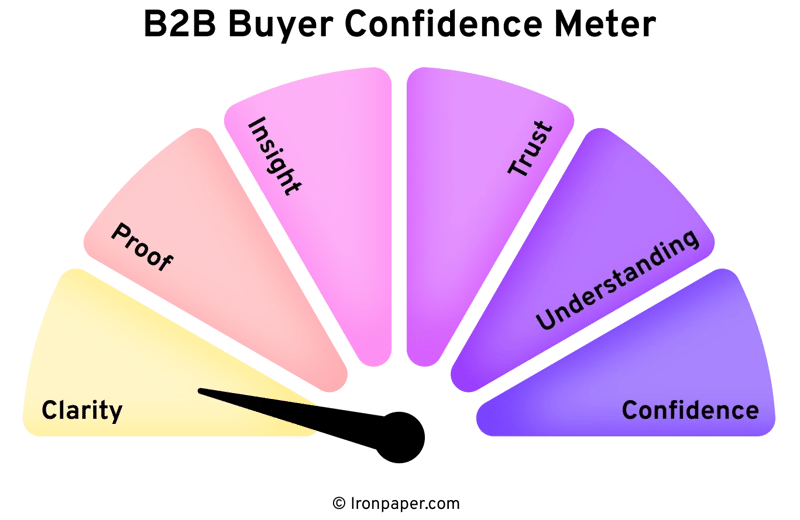
Sales in 2026 is not about control. It’s about clarity. Buyers are overwhelmed with choices, automation, and noise. What they seek most is a sense of confidence that they’re making the right decision with the right partner.
Enablement, proof, and empathy are no longer optional. They are the foundation of modern selling.
In 2026, the companies that grow will be the ones that make buying simpler, smarter, and more human. Not through persuasion, but through trust.