Three forces reshaping lead generation in 2026
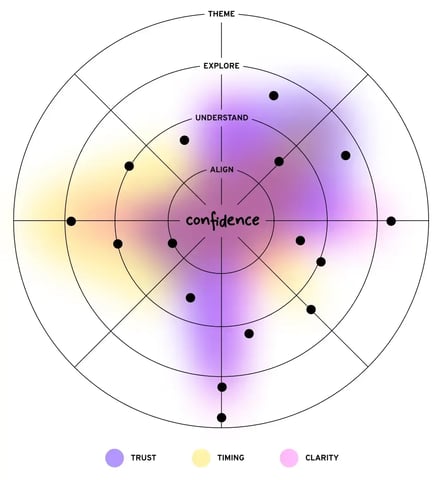
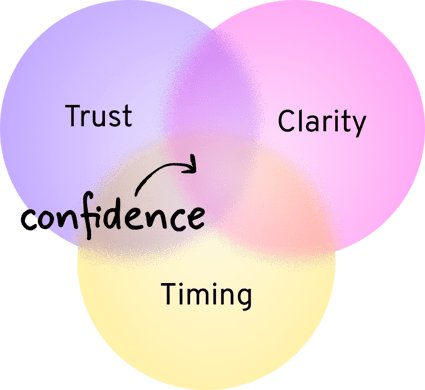
To generate qualified leads in 2026, organizations must reimagine their approach to align with the buyer’s needs and expectations. The new foundation is built on three pillars:
1. Trust: Value must come before the form.
Buyers aren’t just evaluating products. They are evaluating whether an organization understands their problem. That trust is built long before a contact form is submitted. It shows up in how relevant the message is, how clearly the offer is positioned, and how consistently the brand delivers insight without expectation.
When buyers feel like every interaction comes with a catch, trust breaks. However, they remain engaged when they encounter helpful content that resonates with their reality. Lead generation in 2026 depends on building credibility before capturing intent.
- Does your content demonstrate real understanding of the buyer’s challenge before asking for engagement?
- Are proof points (case stories, outcomes, buyer testimonials) visible before the form?
- Can a buyer explore value-driven insights without committing their contact information?
- Do your campaigns offer educational experiences, or only promote conversion offers?
2. Timing: Signals matter more than sequences
Buyers don’t move on marketing’s timeline. They move when internal alignment happens. When a problem becomes urgent. When stakeholders get involved. Static nurture tracks and time-based automation can’t keep up with that complexity.
Organizations need to pay attention to actual signals, such as return visits, topic re-engagement, content depth, or expanded buying group activity. These moments indicate intent more than any lead score. And acting on real signals helps marketing become timely, not just persistent.
- Are outreach efforts triggered by meaningful buyer behavior, not just time-based automation?
- Does your team differentiate between early-stage interest and decision-stage readiness?
- Is follow-up customized based on what the buyer consumed, not just that they converted?
- Do your workflows allow for buyer-driven pacing rather than marketer-controlled sequencing?
3. Clarity: The fastest path to confidence
Clarity is often missing in lead generation. Buyers don’t just want to know what a solution is. They want to know how it works, what it impacts, and what happens next. If that information is hidden behind vague headlines or gated too early, they move on.
Clarity builds confidence. It reduces internal friction. It makes it easier for buyers to justify decisions. In 2026, lead gen that removes guesswork will outperform efforts that rely on pressure or ambiguity.
- Is it immediately clear what you do, who you serve, and what outcomes you enable?
- Do your pages and content make the next step obvious without needing explanation?
- Are key details (process, timeline, outcomes, pricing signals) easy to find?
- Can a buyer use your content to build an internal case for change or investment?
Why Funnels Fail Modern Buyers
Most buyers do not move linearly. They revisit earlier stages. They seek validation from peers. They compare solutions quietly, often without filling out forms.
Yet many lead generation programs are still structured around outdated funnel logic. These systems are designed to push buyers from awareness to decision, but they often fail to support the actual path buyers take.
To improve performance, organizations must shift from funnel optimization to journey design. That means:
- Aligning messaging with buyer questions and priorities
- Removing unnecessary friction from content and CTAs
- Tracking meaningful engagement signals, not just downloads
- Building content that informs and guides, rather than captures and converts
What does effective lead generation look like in 2026?
Lead generation should evolve into a system of enablement:
- It begins with a buyer-centric theme, not a gated asset.
- It offers multiple ways for buyers to explore, learn, and opt in.
- It connects marketing and sales efforts through shared context.
- It builds trust before asking for information.
This model respects the complexity of B2B decision-making. It’s designed to match how buyers evaluate solutions, not just how marketers plan campaigns.
The Real Shift Behind Better Lead Generation
Lead generation isn’t broken, but many of the journeys behind it are. Funnels still treat buyers as linear and predictable. Messaging often assumes clarity where there is hesitation. And most strategies are still built to capture interest rather than guide decisions.
For too long, marketing efforts have centered on getting buyers to raise their hand without considering what happens after they do. But attention is not the same as momentum. A high-performing lead generation engine doesn’t just attract. It equips. It reduces risk. It creates space for internal consensus. It brings the right people in at the right time with the right context.
In 2026, the organizations that drive growth won’t be the ones generating the most leads. They’ll be the ones building the clearest path forward for the buyers who are ready to engage.